#talentbites : How can employee engagement improve business performance

Hosted by Havas People this was my second Talent Bites event (notes from first one here).

The format was a quick hour or so with a couple of introductory bits by Havas followed by three case studies.  It was a really good example of the kind of event where it is helpful to think about the messages after the event, reflect on what you think the key messages were, develop some personal take-aways, etc.

What is engagement anyway?

I’ll start with a point from the Q&A:

“full-on/full-off”

This made me think how many of us can honestly say we are 100% “on” all the time at work and, when away from work, able to relax fully?  Indeed, what does “full-on” really mean with so many questions over UK productivity, people struggling with email overload and ‘firefighting’ taking people away from projects and other work that adds value?  Indeed whilst we can standardise work, to some extent to try and help, there is a risk of stress and a lack of treating people personally.

Discretionary effort

In the introduction engagement was deemed to be “about change, not surveys” and “discretionary effort” (DE).

This got me thinking about a couple of things, firstly that we’ve seen some very high-profile examples of DE in the UK in the last few weeks, not least #snowheroes battling the bad weather.  Secondly, that the idea of people hitting a lull a few years in to a job probably rings true with my own experience and the need to move beyond initial goals and targets.  Personally I’ve also struggled to imagine working for the same company for more than a few years and this chart hints at that idea of decreasing returns.  This, I would argue, is where learning and development very much kicks in as a value add – beyond initial onboarding and into keeping people engaged with career options and development.

Importance of a company narrative

The three case studies, on reflection, all had one thing in common: the companies wanted to grow but needed to baseline to bring people along.  Without that idea of (growth) direction it would be very easy to see how people would not be engaged

I used to run some basic business/consulting skills sessions and one aspect was the different levels of business planning (akin to below image – click for source):
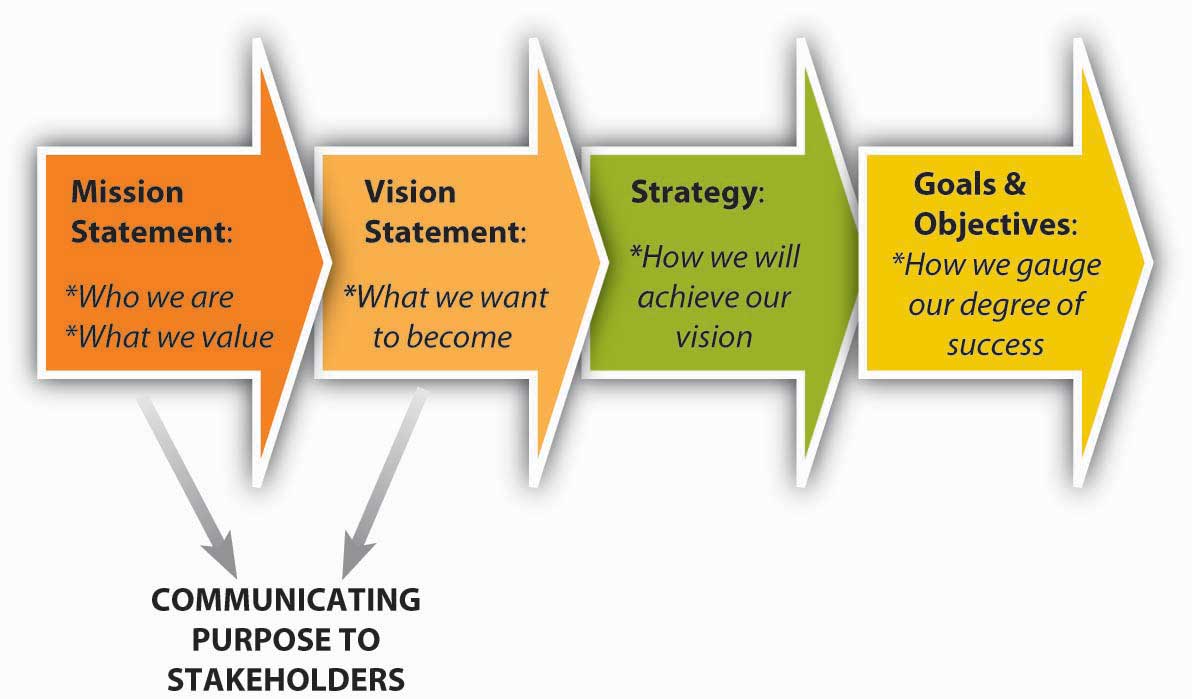
Much like a sports team – if the company’s vision isn’t one of growth and success then it is difficult to engage and gain peak performance.  Even being average is not likely to be much good if we continue the sports analogy, for example, “we’re happy tracking along in mid-table” isn’t going to gain much support from employees (players) or customers (fans).

Engagement as a part of wider system

The complex interactions of internal coms, internal/external branding, learning and other people elements were clearly only touched upon in the short talent bite sessions.  However, the sessions did make me think of HBR’s Human Capital Drivers model and (as well as developing mission, vision and strategy) organisations need to cross link all of these against the below model:

I also found a useful blog post that does a nice job of pulling together some of these various components: and how they can impact on discretionary effort (that it is considering it from a school leadership perspective does not really matter).

Top-down vs Bottom-up; Local vs Global

All three presentations were by global companies and it was therefore interesting to hear how they balanced ‘corporate’ requirements versus local needs.

  • In the case of Umicore – there was a central effort to develop a new employer brand but with a lot of input from across the business.  This input (via research) was deemed key – the new brand was not based on HR and/or marketing’s view of what brand should be.  There was then a “marketing for dummies” brand toolkit developed that could be used locally, with core elements to be customised for local usage.  As the company is a green one and can be seen, via recycling products, to be building a better world it is easy to have people aligned with the brand and be proud of the work by living the values.  They also back this up with “brand ambassadors” who are a network to share interesting marketing and internal coms activities across the group – this sounded like a community of practice and, presumably, shared content on internal social networks, etc.
  • Allergen – a story of considerable change (multiple takeovers either that happened, didn’t happen or were muted) over the last four-ish years (following previous stability of three CEOs in sixty years).  This was an excellent and very personal talk, more open and honest than many you would see at such events.  Against the hostile takeovers there were examples of grassroot activism where people spontaneously acted ‘in defence’ of the brand.  In the end, four cultural aspects were launched to set what the company means for all employees (a ‘BOLD’ culture).  Through all the change, management managed to keep the business going via: authentic conversations, bringing their customers with them and developing the BOLD new company culture.  Overall, I’m sure Allergen would make a great business studies case study for how much change can happen in just a few years!
  • Nomad – A story of turning around multiple brands within a newly created parent company.  They have had turnover of staff, realising you will lose some people, but tried to make people aware if they were being cynical – can’t change everyone but create conditions that can inspire.  Some of this nicely tied in with Strengthscope and the idea of positive psychology.  Some of those more positive aspects articulated in their “Our Way”.  The CEO worked with HR on this to create a turnaround and growth narrative and what people needed to do and how they needed to act to deliver this.  Our Way tapped into basic emotional needs of needing growth and community via combined vision, mission, growth strategy and eight values.  This was not just about posters on a wall, worked with an external partner to run a number of large face-to-face events for what it meant for different levels of management (8×1 day programmes : 800 people from 13 countries) – some snippets from these being shown via video.  The external partner (Breakthrough Global) providing a number of simple tools and activities that aligned to the values for use in these and other sessions.  The presenter and company acknowledged strategy is one thing but need the culture with it and reinforcements were all relaunched: appraisal, culture survey, performance and reward to all align.  Now back in acquisition mode thanks to change, organic revenue growth and company turnaround around, inc. share price value.

Summary of some of the techniques and approaches

So, to summarise the above, here are some of the things that seemed to have worked for the presenters:

  1. Ensure enough focus on people managers: they will win/keep hearts and minds, do not just rely on senior managers.
  2. Keep things simple: from Allergen focusing on four key statements to Nomad’s wider, but nicely integrated, “Our Way”.
  3. Be authentic: personally I’d add transparent to this – both with employees and customers to ensure there is confidence.
  4. Simple tools: give people simple tools to transfer big picture and ‘corporate’ ideas to what it means for individuals in different roles and roll back up from community/grassroot advocates to bigger picture.

I don’t think any of these are revolutionary but it is always good to hear some case studies where things do work and can influence performance.

QA Talent Lab: Jan 2018

“Apprenticeships, apprenticeships, apprenticeships” – what many a person involved in learning will have been hearing about for the last couple of years.  Yet the changes in England (that took place last May) are still really to bed down and the audience in the room for this event obviously had mixed perceptions still.  This variation is, in part, due to the variety of ‘traditional’ roles impacted by the changes and the room was clearly a mix of corporate HR generalists, L&D practitioners, apprenticeship specific staff, QA’s team, etc.

Both client case studies (Capgemini and Royal Mail) made it clear that for apprenticeships to be a success you really need a wide variety of people involved to be a success – and both cases showed CEO/leadership commitment was key due to the fundamental change apprenticeships are for many organisations.

In the evening after this event I had dinner with my family and it was interesting to explain the levy to my dad (who worked for Royal Mail for many years and was, once upon a time pre-RM, an apprentice) and my brother who is now based in New Zealand.  The levy immediately made sense to my dad – “well the companies used to pay for them” and that shift of responsibility for skills development really is what it is all about to me.  It’s time to stop complaining about the skills shortages and actually do something about it – in combination with school partnerships, innovative qualifications, etc etc.


This was my first (the 3rd overall) Talent Lab event (around 60 people in attendance) and it was a really useful day in the current ‘bedding down’ period of the new apprenticeship rules.  The main items from the TL agenda were as below, with some of my rough notes and reflections as bullets below.

  1. Why? Creating the business case and understanding the context we work in.
    Rebecca Plant: Head of Apprentice Solutions, QA

    1. This focused on the ‘why?’ of taking on apprenticeships and introduced some QA resources around “10 killer questions to kick-start your apprenticeship programme”.
    2. In summary it came down to “is this a good use of my time?”: for the apprentice and the company – both need to be getting out of what want, i.e. skill development to solve business issues.  Not about spending levy for the sake of spending levy (hopefully people are not in that mindset but no doubt some companies will be).
    3. Expect quality of apprenticeship to be increasingly the focus, with data to back that up, now the Institute for Apprenticeships is up and running.
  2. Royal Mail Group – Why it matters to us.
    Gareth Jones

    1. 1:185 people employed in the UK work for the RM group (160,000 total) so huge levy fee but also huge opportunity.
    2. RM have put together a small team (5 people) to develop apprenticeship offer, to increase capability in-house whilst changing culture as potentially means big increase in young people in the workforce and opportunity to tackle issues such as low % of BAME representation in workforce.
    3. Currently they have c.100 apprentices (this was good to hear from my perspective as we’re not too far off that number yet with a much smaller workforce).
    4. CEO had committed to all vacancies being apprenticeships – has scaled back slightly now to “all relevant” roles.
    5. They have worked with the unions to get them on side – unions recognizing this is a potential way for RM to massively invest in their members.
    6. Challenges include non-England workforce (c.15%) and developing comparable options (again similar to us).  Also missing suitable standards and EPA orgs in some areas.
    7. Again similar to my experience, they have been through procurement challenges and now balancing QA with other providers, trying to manage nationally where (historically) it was a mixed bag of some regions being engaged with colleges, some not at all, etc.
    8. Some really interesting figures were shown, that I don’t think I had seen before, that showed how strong the 25+ age group is in apprentice start numbers.  Will be useful to reuse to try and finish off that misconception internally.
  3. Executing the Why?
    Anouska Ramsay: Talent Director, Capgemini

    1. A longer history, with apprentices a focus pre-levy.  Basically have managed to move away from graduate heavy hiring schemes to more of a balance with apprentices as a leading organisation in development of degree apprenticeships.
    2. Again a lot of drive was from CEO – aim to re-onboard roles to UK, via apprentices, as way to avoid skills gap and decrease reliance on India.
    3. Looked at the wide range of people that need to be involved, including:
      1. learning and development (be ambassadors for the programmes),
      2. business teams (finance and line managers particularly key),
      3. students (i.e. need to ‘sell’ that apprenticeships are a good thing, not only for men, not about trades but also highly skilled IT roles, etc),
      4. HR (how formalize pay, progressions, etc – as rules change ensure stay in line).
    4. Started small with 24 in 2011.  The big ‘sell’ was that it is a debt free way into work.  Now c.380 on programme(s).  Had a team of 2 to support, now 4/5.  Business deals with pastoral care but escalate to them as needed.
    5. Admitted some pain points – like one total misuse of an AMEX by an apprentice (leading to major policy rewrite) but overall a success.
    6. Recommend attendees get involved so everyone’s voice is heard, e.g. with “apprenticeship boards” – she is on digital (https://www.thetechpartnership.com/recruit-and-train/apprenticeships/digital-apprenticeship-board/), although trailblazer groups are difficult!
    7. Retention is good but do loose some, in part as realize not the career for them and just move to different role internally – first degree cohort had 50% graduate.
    8. Not just about degrees for them – also, for example, Level 4 cyber.
    9. Realized need to “constantly evolve recruitment” – still have grad programme but have clear “two doors into organisation”.  Find grads tend to have more life experience than new apprentice but apprentices up-to-speed in c.6 months.  Selection still done in-house rather than using training provider.
    10. To achieve the EPA standard they use internal job rotations.
  4. Data & the Why?
    Discussion & Networking

    1. A considerations of data requirements, on my table this included:
      1. what we need to capture for targets/government.
      2. what we can do to ensure recruitment correct and then people are competent to deliver the role.
      3. how to measure financial savings, for example from staff and agency cost savings.  Interesting point here about making apprentices non-location specific and brought in expecting to move locations.  Then can be used to fill holes – if they are a project management apprentice, business admin support, etc.
      4. to avoid resistance to “grow our own”, for example in high skilled IT roles, be harsh: reduce budgets for contractors to force apprenticeships.
      5. track as cost vs offshore vs alternative (agency, contractor, etc).
      6. how measure utilization of apprentice – i.e. track what doing in the 80% not just 20% to demonstrate value.
    2. The round robin of tables, predictably, got onto ROI.  I thought it very interesting that, of all companies, the Microsoft attendee (58 current apprentices) shot this down quite quickly: instead saying their focus is on the opportunity it offers for people and the impact/benefit on people will come from those case studies as numbers grow.
      1. Speed to productivity was another measure brought into conversations.
      2. Another table (perhaps drilled in the way of KP) mentioned “indicators” and the need to both reflect and keep across in real time a number of metrics to show benefits – including retention.
      3. There was also the view that year one is always going to be hard and generally companies get better in support of apprentices as time goes on.
    3. Sticking points around the room included getting organisations to be better at workforce planning and HR systems that are not built for the kind of data that is useful to track on apprenticeships.
  5. BAME apprenticeships
    1. Presentation from Isa Mutlib of the Asian Apprenticeship Awards and BAME Apprenticeship Alliance on the continuing misconceptions in BAME communities and the impact (i.e. low take up) on apprenticeships.
    2. Another area with big opportunities: with the groups currently underrepresented yet a bigger part of under 18 group than previously so should be an increasingly important demographic for early career hires.
    3. Are lots of other focus areas that crossover – such as Women in STEM, Women in Tech, etc.  Overall familiar messages about needing to break some stigmas, better inform career choices and break obsession with universities as main route to work.

Adapting your Personal Brand in a Volatile World (Event)

A thought provoking breakfast session at TeleTech consulting.

Whilst I attended to think about my own brand and how I can support others with their own it was really an event that worked at multiple levels – individual, team, department, organisation, etc.

The three recommended strategies:

  1. A growth mind-set vs. fixed
  2. Clarity of self, strengths, passions, differentiation (vs. other, technology…)
  3. Understanding value (the market…)

nicely align to some of my recent work, including via the strengths based positive mentality.

This brought my mind back to the Mercer/HBR paper I picked up at the Leadership Symposium on “Bottom-Up Leadership” and their own Venn diagram showing the need to combine personal strengths, personal interest and business needs.

I was particularly interested in attending after a recent event where I saw some old colleagues for the first time in c.5 years.  Those interactions highlighted the long term perceptions people hold and the TeleTech event described this as the weighting of perception on one trait rather than taking a balanced view.  The personal brand was described as the “story people tell about you behind your back” so I guess we all need to get back to basics and reflect on our expertise.  I also thought this paralleled with the idea of the weight we give to first impressions.

The three fundamentals of the brand outlined as:

  1. Credentials
  2. Passion
  3. Market Needs

The sweet spot, the trait to focus on, being the middle point of these three.  The challenge here was to “go big” on the sweet spot, this posing a test for me as I would like to be seen as being good at a number of areas of L&D competency.  However, when I was looking for work a couple of years ago, I suspect I was not “selling” myself well enough due to too broad an interest?  I also thought there were challenges around what I could do and what I have actively done a lot of – the two do not automatically line up but that is not necessarily a bad thing if it can be justified in the middle ground of the 3 brand items.

UKeIG: Digital Literacy in the Workplace

This day workshop really ended up getting me thinking and my thoughts (as articulated below) are probably still not very tidy.

What does being ‘digitally literate’ even mean?  What does digital literacy look like?  What does it mean to different industries/sectors?  How does it compare to Information Literacy?

Perhaps predictably for a CILIP group event the first couple of presentations were quite focused on Information Literacy [in the SCONUL kind of sense] and the day did continue to think a lot about electronic resources and e-information.  This said, it did highlight how different people have different views on DL, for example mine would be more in line with the Belshaw model than how information professionals might consider the topic [note I tend not to call myself an info pro anymore!].

Key activities related to the topic were included in the day’s presentations, my interest in attending being particularly around the training of ‘clients’ (although a number of delegates made the point of not calling it ‘training’ to increase engagement), to up-skill staff and students (the latter for the large number of delegates working in education).  The “don’t call it training” advice will be well known by L&D folks and Wendy Foster’s session on the City Business Library made the point perfectly: it should be outcomes/WIIFM focused, i.e. not “database training” but “creating business to business contacts”.  eLearning was also mentioned as increasingly important for library/information professionals – and I made the point on Twitter that some of us have moved away from the ‘traditional’ profession via this route:


Personally, when I think about digital literacy, I’m thinking digital competency and capability.  This includes how people can be encouraged to be open to technological change, continue to develop their knowledge and skills within the requirements of their role and for possible future needs.  Indeed in the initial brainstorm of what it meant for us, I made the point of saying that it really can mean anything and everything.  I continued by arguing a need to “get on with it”, more than worrying about definitions, in a similar way to how L&D faffed about with what “coaching” meant only for people to go ahead and crack on with it (in various guises).

The different perceptions, semantics and language used around the topic continued to come up throughout the day and I couldn’t help but feel that businesses have adopted “digital transformation” as a buzzword, largely via IT Services, whilst a lot of professions have been left behind.  This is an interesting one for libraries/information considering eLib was a very ‘early’ series of service transformations (again for education – and a key part of my MA dissertation) that arguably (at least in my dissertation) was not followed through (or at least maintained).  eLib, however, is largely the cause of the LMS language divide between workplace LMS (learning) and UK higher ed (library – and use of VLE over LMS).  Anyways, I’m getting waylaid by semantics and history (which I tend to be)…

The day considered various pieces of research such as the ‘Google Generation’ which got me thinking about the laziness, ‘buzyitus’ and other factors which might be as important as UI/UX decisions:


A couple of sessions referenced Information Literacy in the Workplace by Marc Forster.  I don’t think I’ve ever looked at this [at c.£50 (it’s a Facet book after all) I’m unlikely to] nor the also referenced Information Literacy Landscapes by Lloyd.  Overall there remained a feeling that we were talking about a narrow subset of the digital skills I would consider people need.  I quite liked this model when reflecting on the day and Googling alternatives and, for workplace’s aligning to the apprenticeship standards, perhaps functional skills frameworks are the standard to be applied.

The JISC session nicely considered the wider issues (Flexing our digital muscle: beyond information literacy) but, unsurprisingly again, was very HE orientated – their model of “digital capability” however could be flexed for other environments.  Is the model of creation, problem-solving and innovation (in addition to an information focus) the way to go when thinking about digital skills – i.e. should they just be embedded at appropriate (Blooms taxonomy?) levels of technical capability?

Overall, there is a huge impact on productivity from information overload, a lack of digital skills and related issues.  If we (as in our organisations and the UK overall) are to improve perhaps we need to recognise this and invest in people for longer term impact and improvement.  Whilst one session, correctly, pointed out that work is about “KPIs not coursework” it is also an oversimplification.  As required skills are changed by technology the knowledge, skills and behaviours will change and be reinforced.  In terms of quick wins, the start point may well be developing some shared vocabulary within your own organisation to then support people with.

Interact Taster Day

I previously mentioned that I recently attended a taster day at Interact’s London office.  Beforehand I did not really know what to expect, having agreed to attend to see if there were some useful tips and tricks for my own leadership and management support.

Overall, it was a good day.  I’ll admit to initially being nervous about an actor-led development organisation but there were a lot of useful points to reflect on.

Some particular takeaway points reflected on below.

A bit on Interact

Undoubtedly some real value in the techniques (such as forum theatre, hot seating, etc) and it is very impressive that they’ve managed to grow to “over 1000 associates”.  That number means they are now likely the largest employer of actors in the country after only the BBC – with most having achieved additional relevant qualifications in areas such as executive coaching.

Value of stories

A number of examples were of the all-important impact through stories to “provide meaning”.  This will resonate with most people who have any kind of instructional design background – but coming at the issue from the world of drama and acting.

First thing the founder did with the company was to ban the use of “role play” – instead want people to be themselves, actors pick up the customer or other perspectives.  I can recognise here the value in seeking realism, however, I’ve also had some success where playing a role (other than your own) can change perspectives.

Value of actors

Undoubtedly there is value in actors providing a real life environment for safe learning environments.

I have had mixed feelings about this in the past, over if there is realism in using actors, for “practice based learning”.  However, I’ve see plenty of good examples over the years and the day included more, including forum theatres for Transport For London.  Interact’s standard practice is starting with the extreme bad situation (to get people engaged) and work backwards.  In TFL’s case this was about not just following process but delivering customer service, part of organisational change from ‘we were running a railway, now we run a service’.  The argument being that drama is 3D and human so will engage, unlike PowerPoint.

Another advantage of actors is undoubtedly the ability to playback ‘scenes’ and there were some good examples where they replicated scenarios perfectly so people could improve their performance.

Role of the facilitator (beyond acting)

Useful to keep in mind that “facilia” of “facilitator” is to “make easy”.

I liked this as it is somewhat ‘meta’ for L&D professionals but it is the balance of educationalist rules and ‘teaching’ versus the more realistic key purpose of the role: engage.

In the examples shown, the facilitator, separate from the actors (at least on the taster day), support the interactions/acting and move into skills via facilitating the audience discussion.

Importance of culture and language

Interesting cultural differences were discussed throughout the day, for example, Americans tend to expect to see good practice first, not bad.  However, Interact find better retention with their approach – 30 writers making use of humour (including a bit of drama shown adapted from the famous John Cleese/Two Ronnies sketch) on and other techniques.

There were some good conversations on the day around language, including a recommendation to avoid asking for volunteers: instead give orders (“show me what you mean”) but not in the tone of an order (so avoid negativity).

Founded by a playwright, they stress the importance of words, for example “as you know” is the beginning of a telling off, not the way to start feedback.  The 93% non-verbal ‘rule’ has been debunked and we do need to think about what we say and how.

Context is king and globalisation has led to “leading by written word” (particularly email), indeed I’ve often thought this is in part why leadership is being viewed so poorly).  Another activity considered “what is leadership?” and an analysis of the words people responded with (nouns vs verbs, etc.) was really good.  Again, cultural differences were considered – in this case due to the nature of the English, French, German, Arabic, Chinese and other dictionaries.  This is a personal topic of interest for me as I think English, or at least my, education failed to look at English in the same way that you would then be expected to know linguistic rules to learn other languages.  Thus I found French and German very difficult.  There is, of course, the argument that learning Latin is a great way to understand such rules but that’s probably not going to be a realistic way forward for most people.

The importance of language was shown in some good examples, for example M&S adverts used noun > adjective > adjective > adjective to turn the brand (M&S) itself into an adjective.

Won me over on Communication Styles

Communication styles [HRDQ style series] was used well in another activity to get people thinking and talking in the room.  Generally I’ve resisted such activities that attempt to put people in/on a limited scale (a spectrum of four categories in this example) but, again, the facilitation was very good in getting the attendees involved and getting key messages across (including the need for balance) and how people go about the work, e.g. as a “systematic” communicator I wrote on the flipchart with arrow bullet points, hinting at the ‘getting on with the task’ mentality.